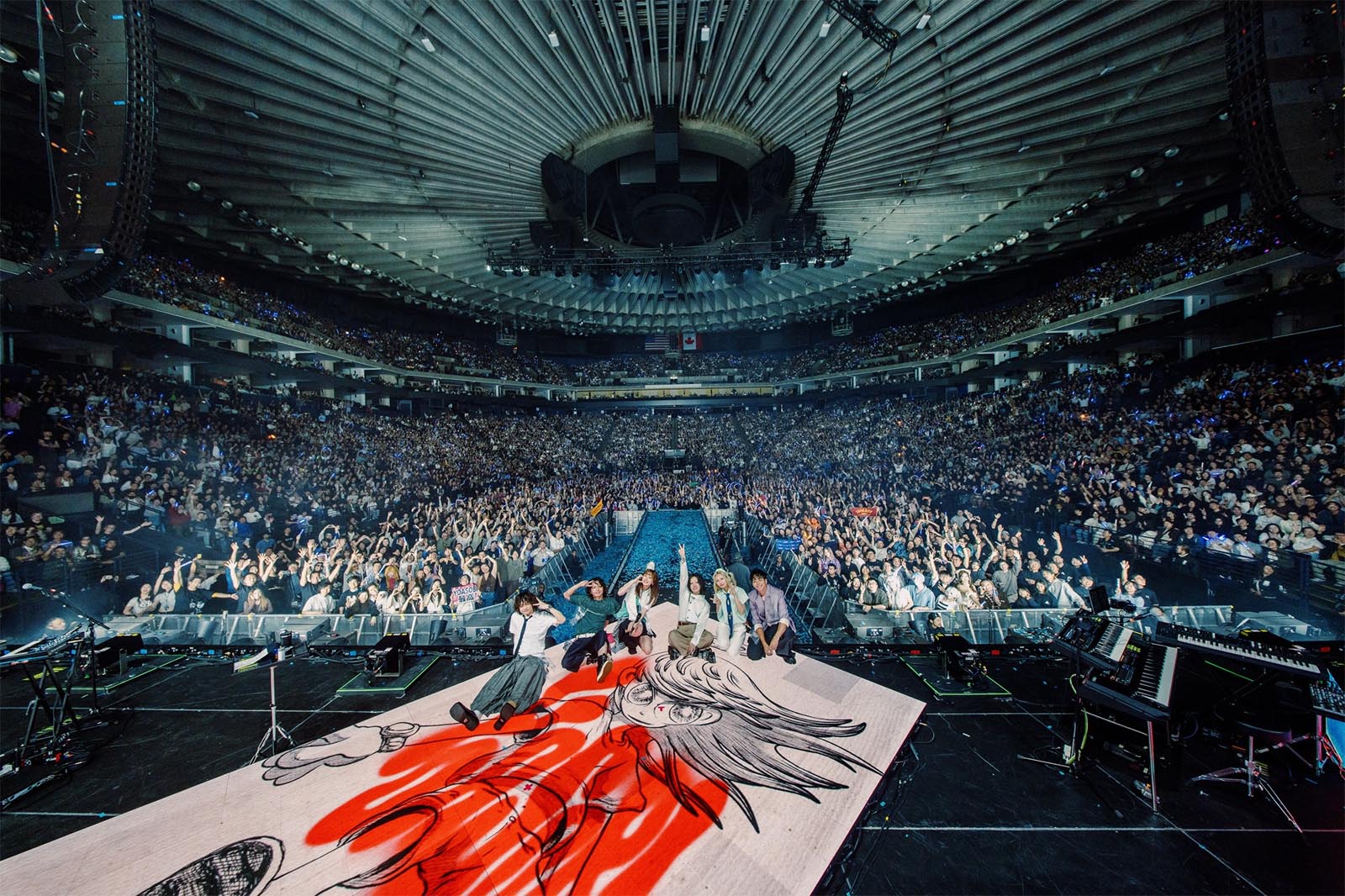
YOASOBI is one of the biggest acts in Japan at the moment. This is one of the few times they've come to America and held standalone shows, with two of those times being their American West Coast and East Coast debuts in 2024. Tickets were very limited for those stops, and for this tour, they aimed for much bigger heights.
For a lot of bands, filling up a dome or arena-size venue is a far-off dream. You start with club shows that hold a few hundred before proceeding to mid-size venues that hold a few thousand. A lot of bands never get out of that size, and it's even more difficult for an overseas act to do so in America. Things like concert halls, arenas, and stadiums never happen. But YOASOBI? They have easily cracked that wall.
Photo credits: Matty Vogel
Photos from Oakland and LA shows
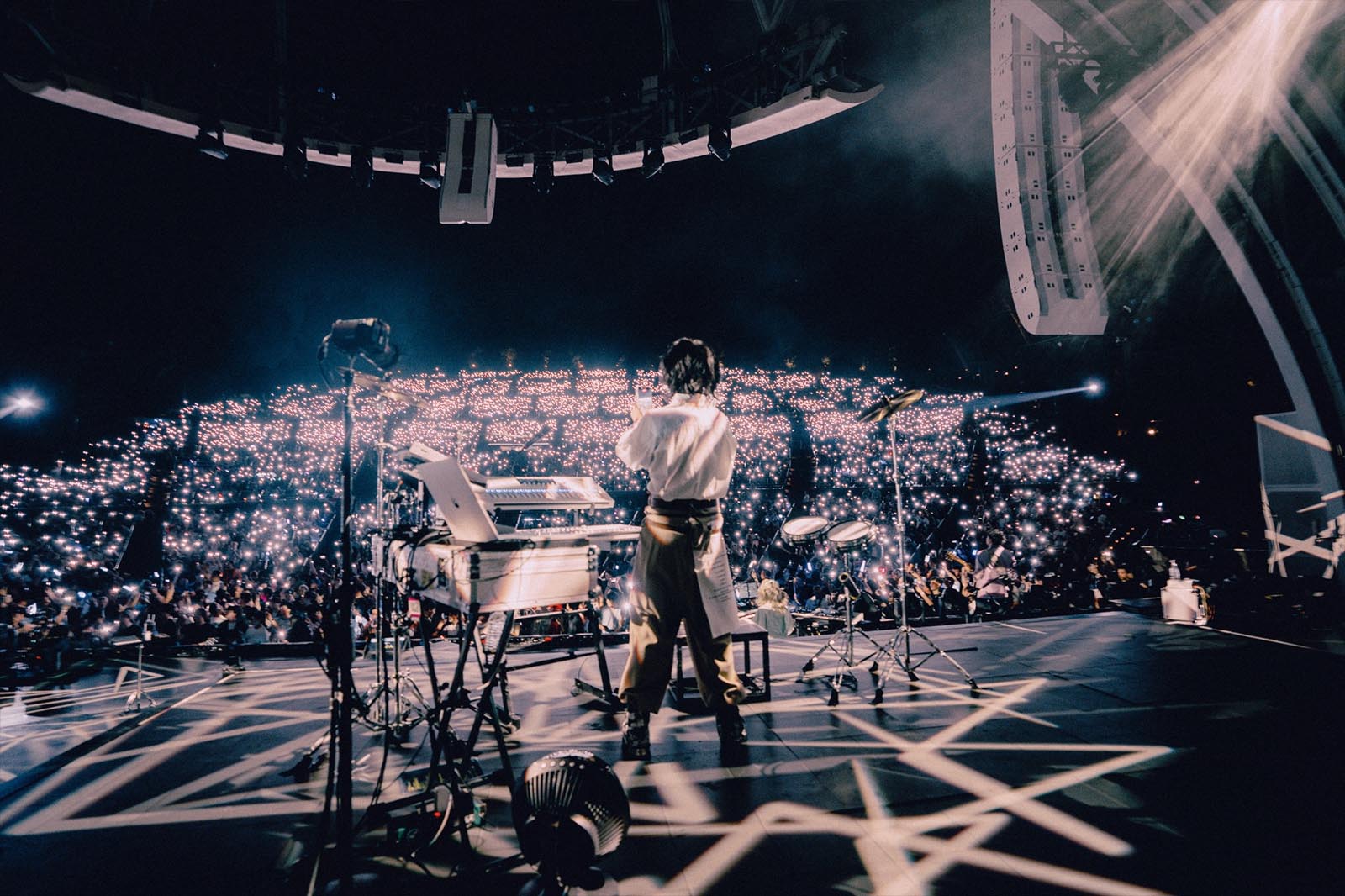
The Never Ending Stories tour took the group around North America, starting with Osheaga Music and Arts Festival in Montreal and Lollapalooza in Chicago. They went coast to coast, going from Boston to Brooklyn, back up to Ontario, and then west to Seattle, Oakland, and finally Los Angeles. Every single one of these shows was at a venue rated for 17-20k attendees, never mind the festivals which had hundreds of thousands in attendance.
Even better, the shows were sold out. I attended the Oakland Arena show on August 14, and practically every seat was filled. A lot of times when you go to a "sold out" show, it's only sold out by the grace of half the venue being blocked off. This time there were no restrictions, so it was truly sold out. I haven't seen YOASOBI live since 2025 at Los Angeles' Matsuri festival, so this show is overdue for me.
Before we go any further, I should explain YOASOBI a bit. YOASOBI's core members are vocalist ikura and producer and songwriter Ayase. For this tour, they are accompanied by bassist and band master Sota Morimitsu, guitarist Ash, Ena Suzuki on keyboards, and Hiroki Ono on drums. YOASOBI's key concept is "making novels into music," and that concept is what led Ayase to reach out to Ikuta to form YOASOBI as part of a project involving Sony's creative writing social network Monogatary.com. Their first song was "Yoru ni Kakeru," based on the short story Thanatos no Yuuwaku (The Temptation of Thanatos), written by Mayo Hoshino. The song quickly reached millions of views in no time flat and propelled YOASOBI into popularity.
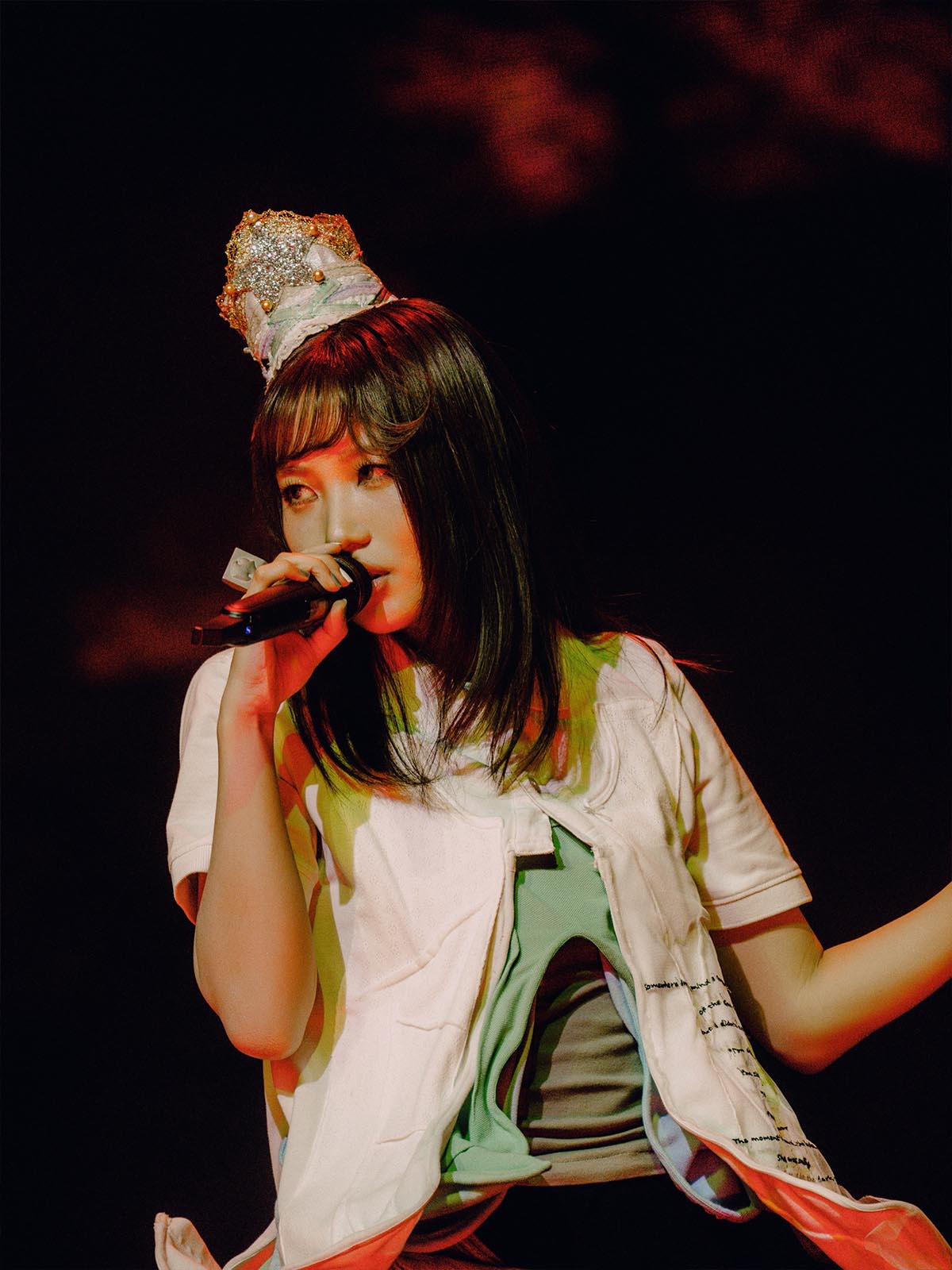
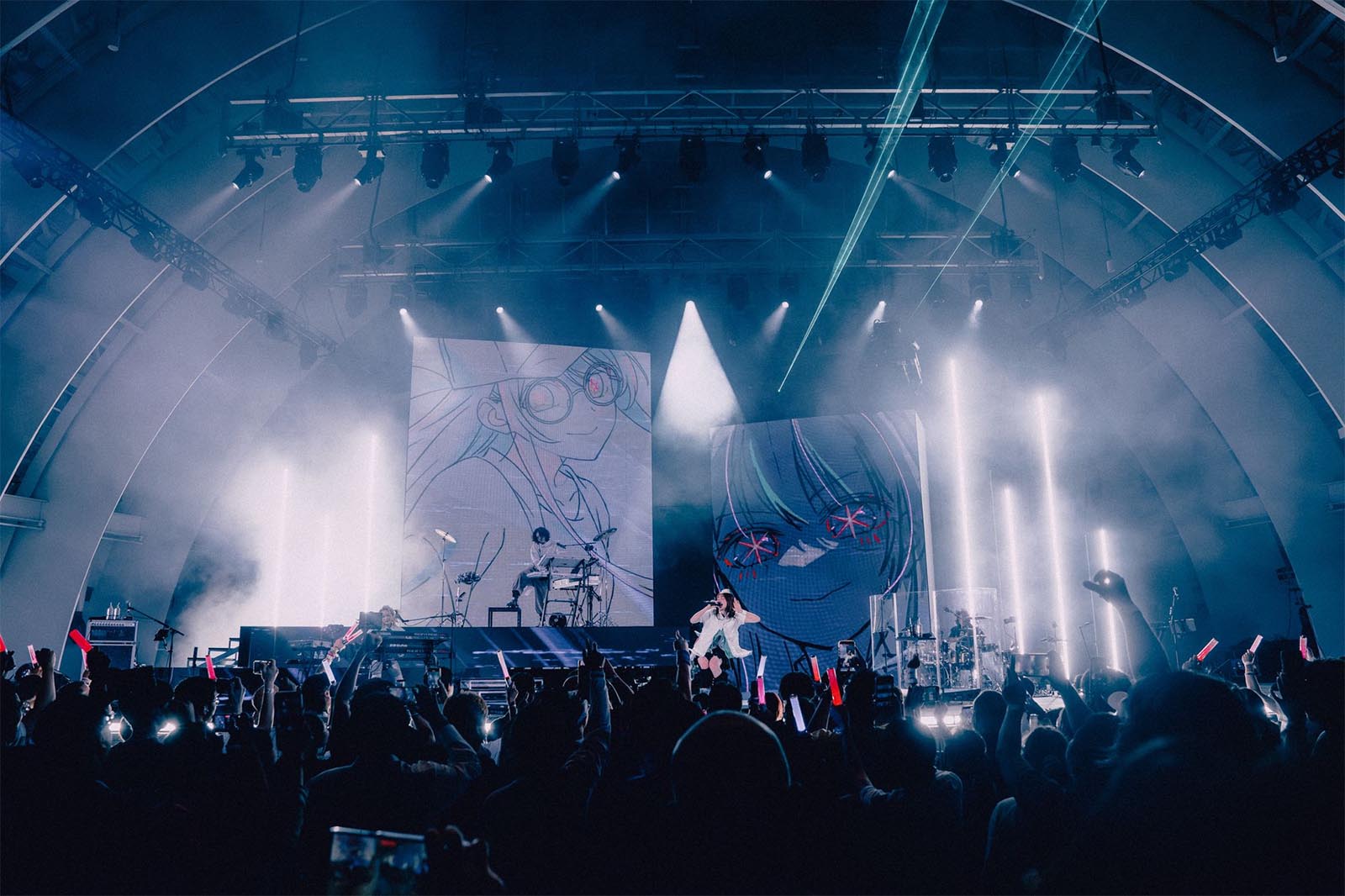
Fittingly enough, each member of YOASOBI's outfit had things that incorporated writing. ikura had writing on her shirt, puffed out and curling to appear like a scroll, and Ayase had myriad alligator clips lining the edges of his. Sota Morimitsu's shirt was line-ruled like a composition notebook, and Ena Suzuki had a green paper-clip headband. I wasn't quite able to figure out what Ash or Hiroki Oni had on their outfits due to the angle and distance, but I can only assume they were the same. The stage itself fit the literature theme with two large vertical screens that at times were set to appear like books. These screens were also the primary displays for background visuals related to each song. Two more platform screens, slightly offset like books stacked on top of each other, served as Ayase's perch. ikura herself was on top of a short flat screen, kind of like a magazine. A lot of times bands compromise on what they bring with them to overseas shows, but I can say this stage doesn't lose out to those you might see in Japan.
The opening song for the night was "Idol," the hit opening theme of 2023's Oshi no Ko. This was followed by "Shukufuku" and "UNDEAD," which are from Mobile Suit Gundam: The Witch from Mercury and Monogatari Series Off & Monster Season, respectively. These three songs have been the opening songs for practically every YOASOBI live over the course of the last year. "Idol" is a particular favorite of mine, which is weird, because I initially wasn't a huge fan of the song (but was a fan of Oshi no Ko). After hearing it practically everywhere in Japan over the course of a whole trip, it grew on me and has cemented a treasured place in the set list.
After "UNDEAD," we got a bit of a Japanese lesson. Ayase first asked if people spoke Japanese, to which a few of us said yes. Ayase then shouted, "Usotsuki! (Liars!)" and then had us repeat after him: konnichiwa (hello), hajimemashite (good to meet you), and aishiteru (I love you), to which he replied, "I love you too!" We learned the adjective "oishii" (delicious), and finally, "mou ikkai" (one more time). This would come into play much later in the show.
The next few songs were "PLAYERS," "Watch me!" and "Biri-Biri." "PLAYERS" is a song dedicated to the 30th anniversary of Sony's PlayStation systems and all the people who have been a part of it. The song is from the viewpoint of the titular players themselves and all the various stories that we have experienced thanks to PlayStation. "Watch me!" is the first opening of the anime adaptation of the romcom Witch Watch. On the other side of the coin, "Biri-Biri" is representative of Nintendo's Pokemon, namely Pokemon Scarlet & Violet. "Biri-Biri" itself is onomatopoeia for the sparking or crackling of electricity, which brings Pikachu to mind, but also applies to the intensity and excitement of Pokemon competitions.
It is at this point that we shift tempos to slower songs, including "BABY" from the shoujo manga Hana-Kimi and the three short-story songs "Tabun" (based on the short story of the same name), "Halzion," based on the story Soredemo, Happy End, and "Suki Da," based on the story Hikari no Tane. For "Tabun," ikura instructed everyone to bring out their cell phones and turn on their lights, creating a sea of stars. From here, we returned back to the realm of anime and games with "Yasashii Suisei (Comet)" from BEASTARS, "Orion," which was produced in conjunction with the video game Overwatch, and "Yuusha (The Brave)" from Frieren: Beyond Journey's End.
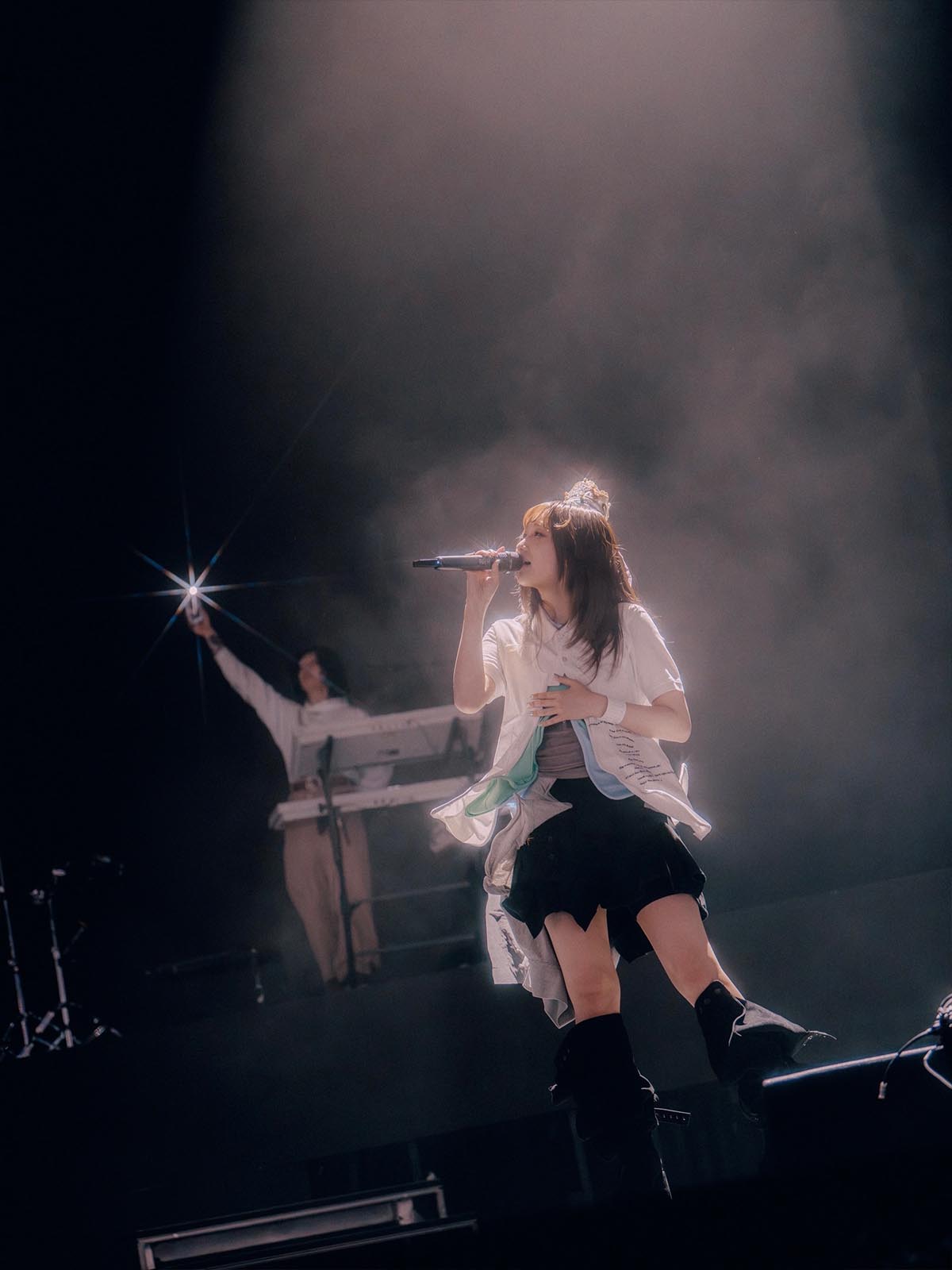
After "Yuusha," Ayase took to the microphone (paraphrased by me): "Coming here overseas and seeing so many people is still new to us. Thank you all for singing together, raising your hands, and shouting along. I'm sure you were all excited for the show, but I was even more excited. I'm having a great time.
Do you like anime? Do you like manga? Do you like music? Do you like YOASOBI? Seeing all your faces and expressions fills me with happiness. We're usually active in Japan, making music, performing live, and working daily to present Japanese culture (to the world). Even though everyone is far apart, we all had different ways that we learned about YOASOBI. Being able to gather together is truly a blessing. We're only partway through this show, but I promise you, we will be back again. Will you come see us?"
Time for one last sprint led by "Kaibutsu," also from BEASTARS. This was followed by "Seventeen" from the story Iro Chigai no Trump and "Ano Yume wo Nazotte" from the story Yume no Shizuku to Hoshi no Hana.
It was then ikura's turn on the mic (paraphrased by me): "We can sing and dance together in Japanese, and become one through music. We traveled to so many different places on this tour and built a strong bond with you. Behind the scenes, our Japanese staff and US crew teamed up hand-in-hand to create this stage together. We all share this stage called life, so let's enjoy it together." Sadly, this also marked the last two songs of the set.
The first of the two remaining songs was "Butai ni Tatte," which was featured as part of NHK's coverage of the 2024 Tokyo Olympics. For this song, ikura took up a guitar to join in with the rest of the band. The final song of the main set was "Gunjou," based on the manga Blue Period. Blue Period is about the trials and tribulations that every artist faces (the Blue Period is also a period in the life of the painter Pablo Picasso). The song culminates in a torrential blizzard of blue confetti that covered the entirety of the floor seats and even traveled its way up to the lower dome seats where I was sitting. That final chorus and refrain of "Gunjou" are well-cemented in my mind.
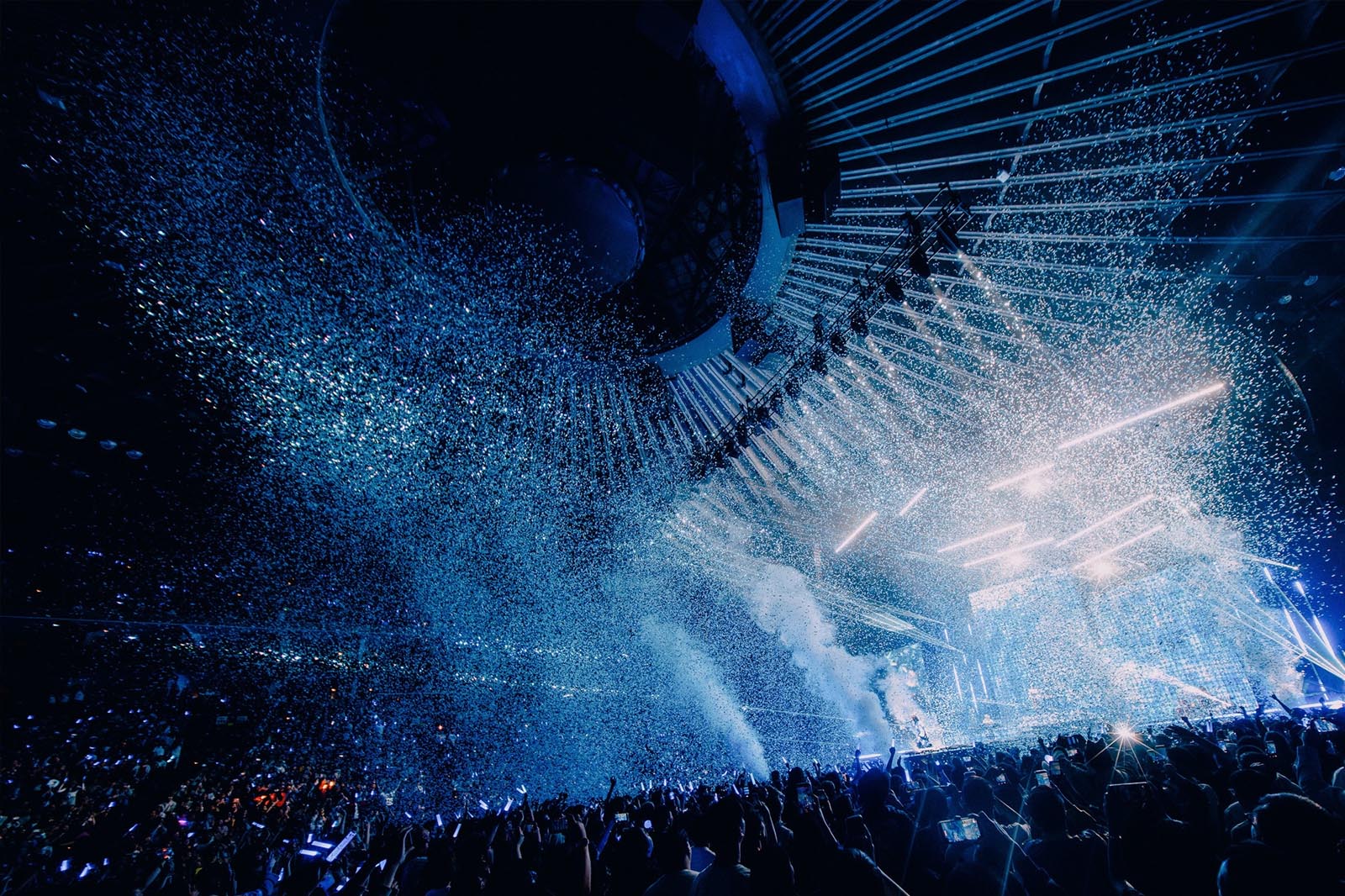
The band took some photos on stage, and then departed for the back.
The word "encore" in Japanese is still "encore," but pronounced more like "on-core-ray." Given that most people here don't go to Japanese shows and don't know that tidbit, but did take part in an impromptu Japanese lesson, the venue defaulted to "mou ikkai." Close enough. During the break, cameramen scanned the room and put members of the crowd on screen. This included cosplayers, children attending their first concerts, people with YOASOBI banners, and many others.
Throughout the tour, Ayase and ikura have worn jerseys relating to a local sports team as part of the encore. That would be fine, except for one thing: Oakland currently doesn't have a sports team. Their (ex) baseball team, the A's, are in the process of moving to Las Vegas and currently play in Sacramento (two hours away) as a stopgap. Their football team, the Raiders, already moved to Las Vegas many years ago. In my mind, the best remaining choice was the Golden State Warriors, as Oakland Arena was the place that the Warriors played in for decades and won three of their championships within the walls of this very venue.
With that in mind, I wondered what they would be wearing. After maybe ten minutes, Ayase and ikura came back on stage with an answer: the San Francisco Giants. That'll do, as the Giants are just across the bay. For those of you who don't know, the San Francisco Giants have a doppelganger in Tokyo in the form of the Yomiuri Giants, who also happen to be the biggest baseball team in Japan, so merely seeing the font and colors of their jerseys will be immediately recognizable.
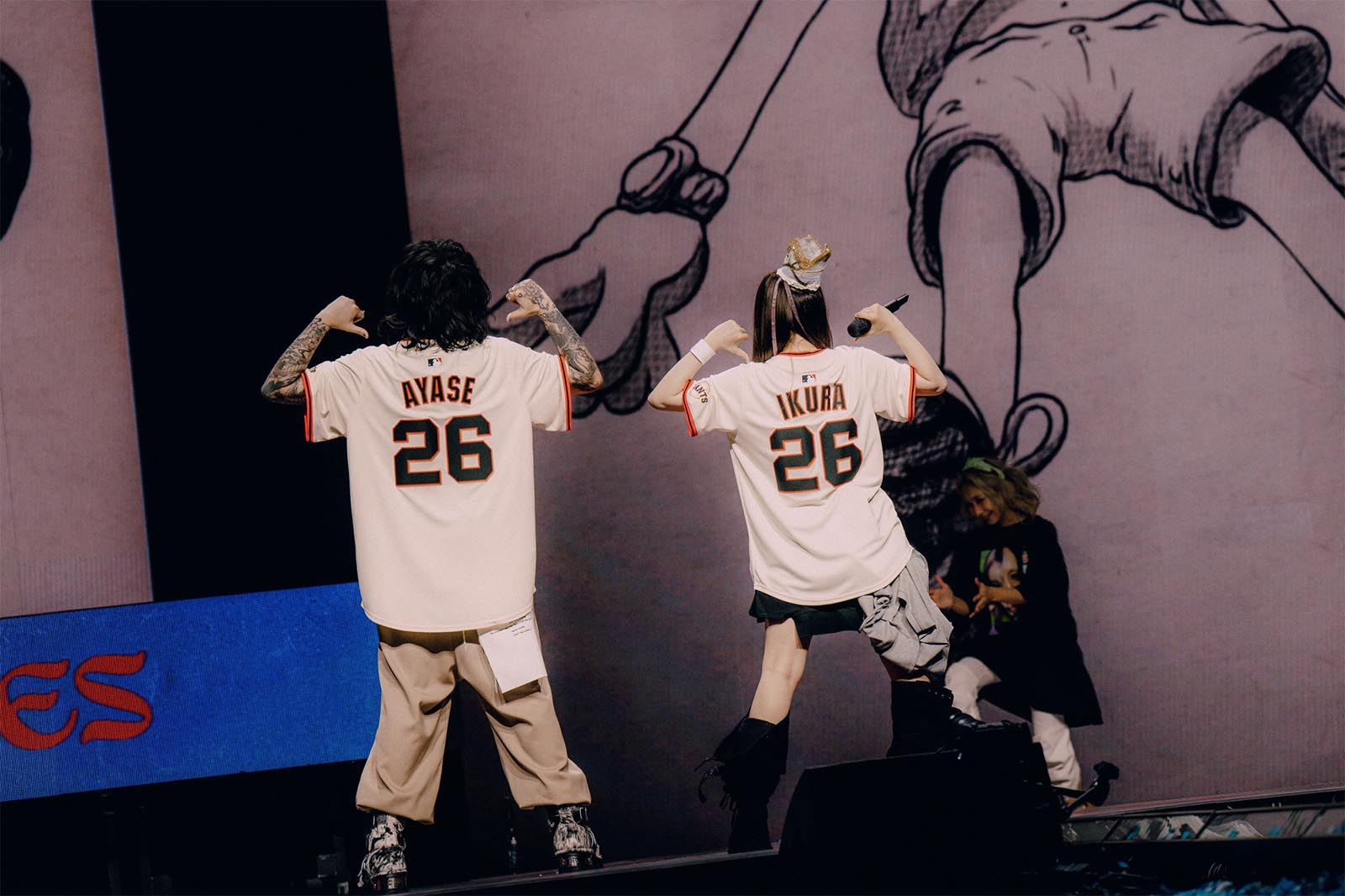
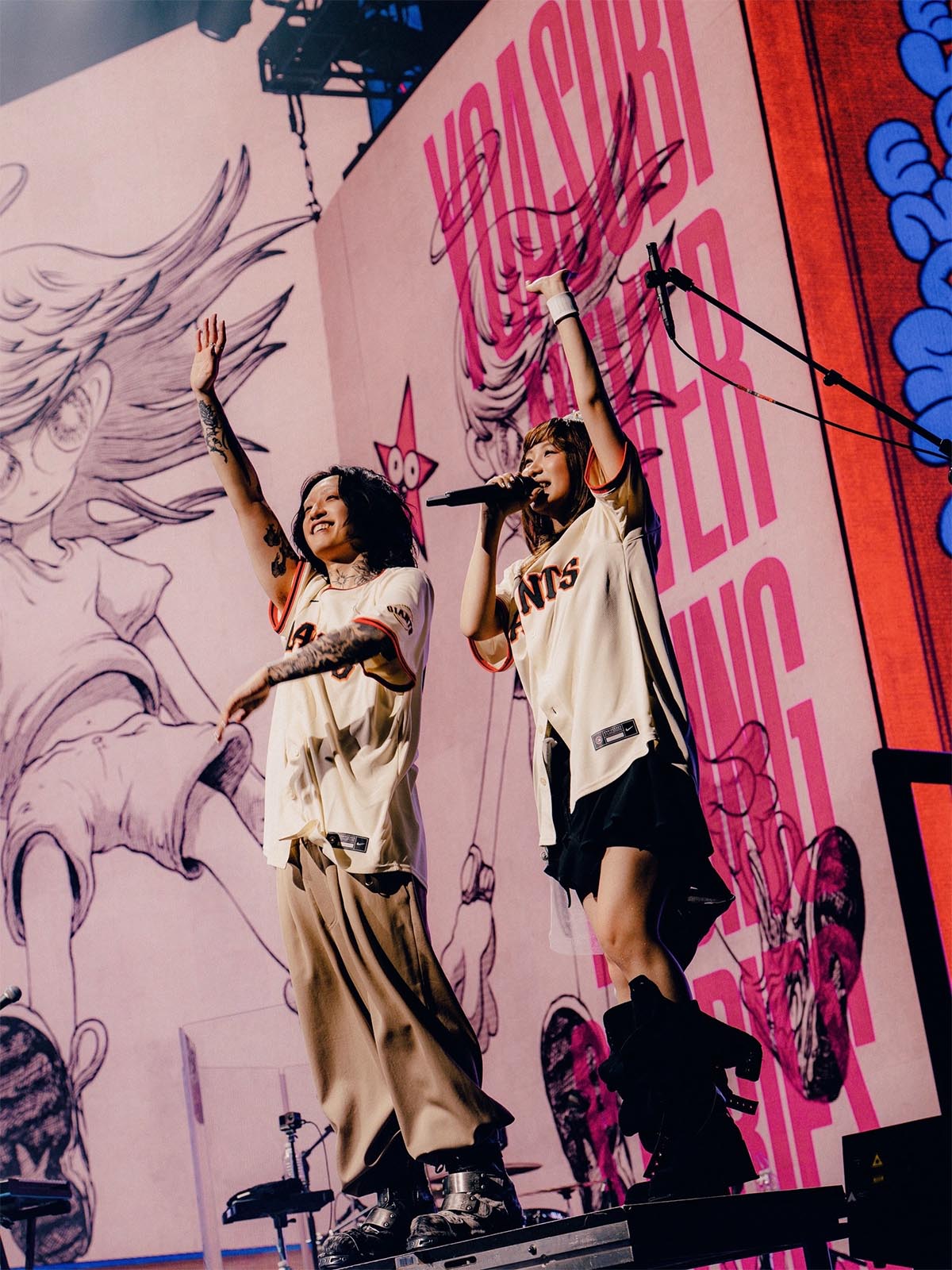
I'm going to digress for a moment. One thing about American crowds is that if there's a seat, they don't stand unless they have to. In Japan, practically everyone stands, seat or not. It's to the point that sometimes there are sections designated as "no standing." Thus, for the majority of this show, people sat throughout the arena.
The first song of the encore was "Adrena," the opening theme of Hana-Kimi. And people finally stood. People finally came alive and gave all the energy they had left into the encore. The final song was the group's debut song, "Yoru ni Kakeru." A perfect way to end the show with a song whose title translates to "racing into the night." But, unlike the characters in that story, we'll be waking up again to the dawn. Our night is just the prelude to our next day. To that next concert, whenever and wherever it might be.
The Never Ending Stories tour was quite the success, with every show of the tour packed with fans. It's a gamble to hold shows at large venues, especially if you don't know if your fanbase will come out to see you, but YOASOBI pulled it off with aplomb. You can think of the Never Ending Stories tour as being the opening act of a YOASOBI world tour that also includes the upcoming Japan/Asia dome and stadium tour, set to start this October in Osaka, Japan. The Asian dates of the tour have not yet been published, minus the show at Singapore's National Stadium on February 20, 2027, which also happens to be the lone Southeast Asia show for the tour. I have not yet decided if I'll be seeing YOASOBI in Japan, but don't be surprised if you see another post from me.
I'm happy to report that there was a respectable number of penlights in the audience. In contrast, only a few of the bright ultra-orange glowsticks (fewer than a dozen people by my count) appeared, but that's something more of a deep dive into Japanese concert culture. Equally few people knew the chants that go along with the songs, but I'll make an exception since for a lot of people, this is the very first time they've been able to see YOASOBI live. During 2024's solo shows, it was mostly limited to those either lucky enough or those dedicated enough to get tickets. The larger venues of this year's tour made seeing YOASOBI live much more accessible, and the twenty thousand or so total in attendance in 2024 has bloomed to well over a hundred thousand.
Soon we will have another YOASOBI article, this time about their pop-up shop at Complex LA. The pop-up included a very rare opportunity to meet Ayase and ikura and get their autographs on the vinyl record of their just-released The Book For album, as well as an exclusive, up-close view of some of the stage production. Stay tuned.